
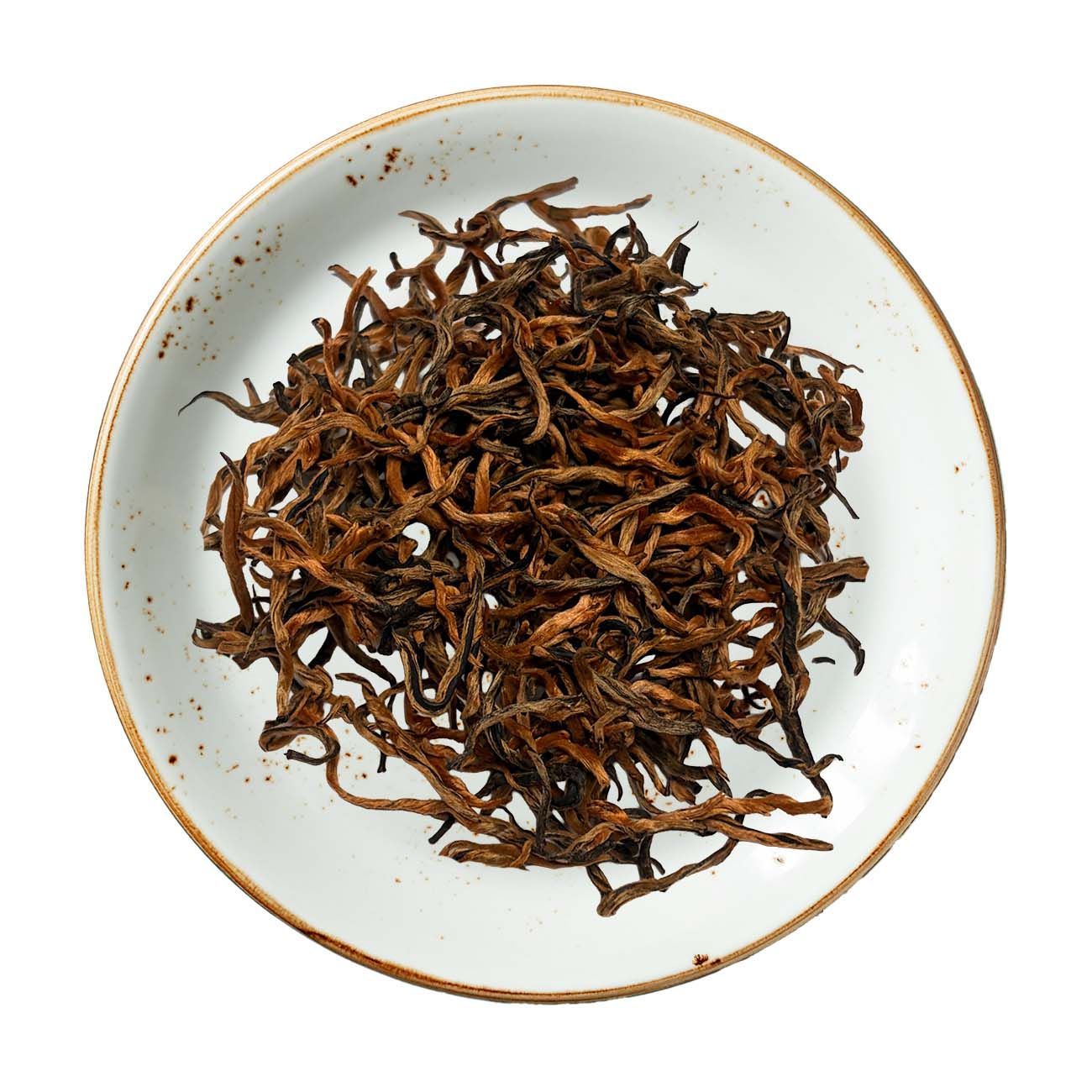
Mi Xiang Jinsi Black Tea
This is a spring 2026 black tea from Yunnan, made up of long, thin, twisted golden strands that give it its name. It is smooth and sweet rather than brisk, with plum and citrus over a soft honeyed base, and it finishes bright instead of drying out the way a heavier breakfast tea can. If you have been curious about Yunnan black tea but have found the maltier examples a little rich, this is an easy place to start.
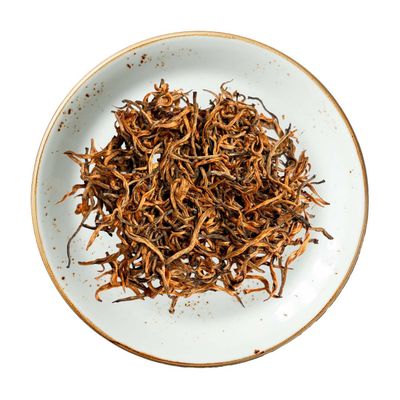
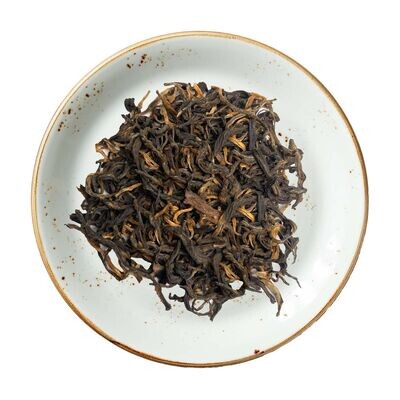
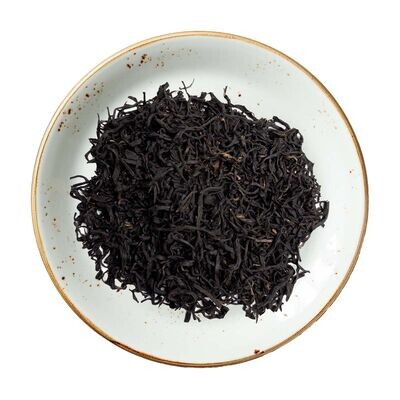
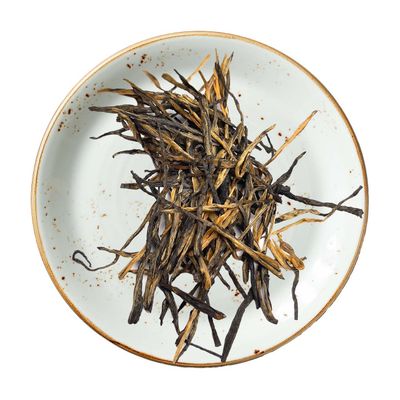
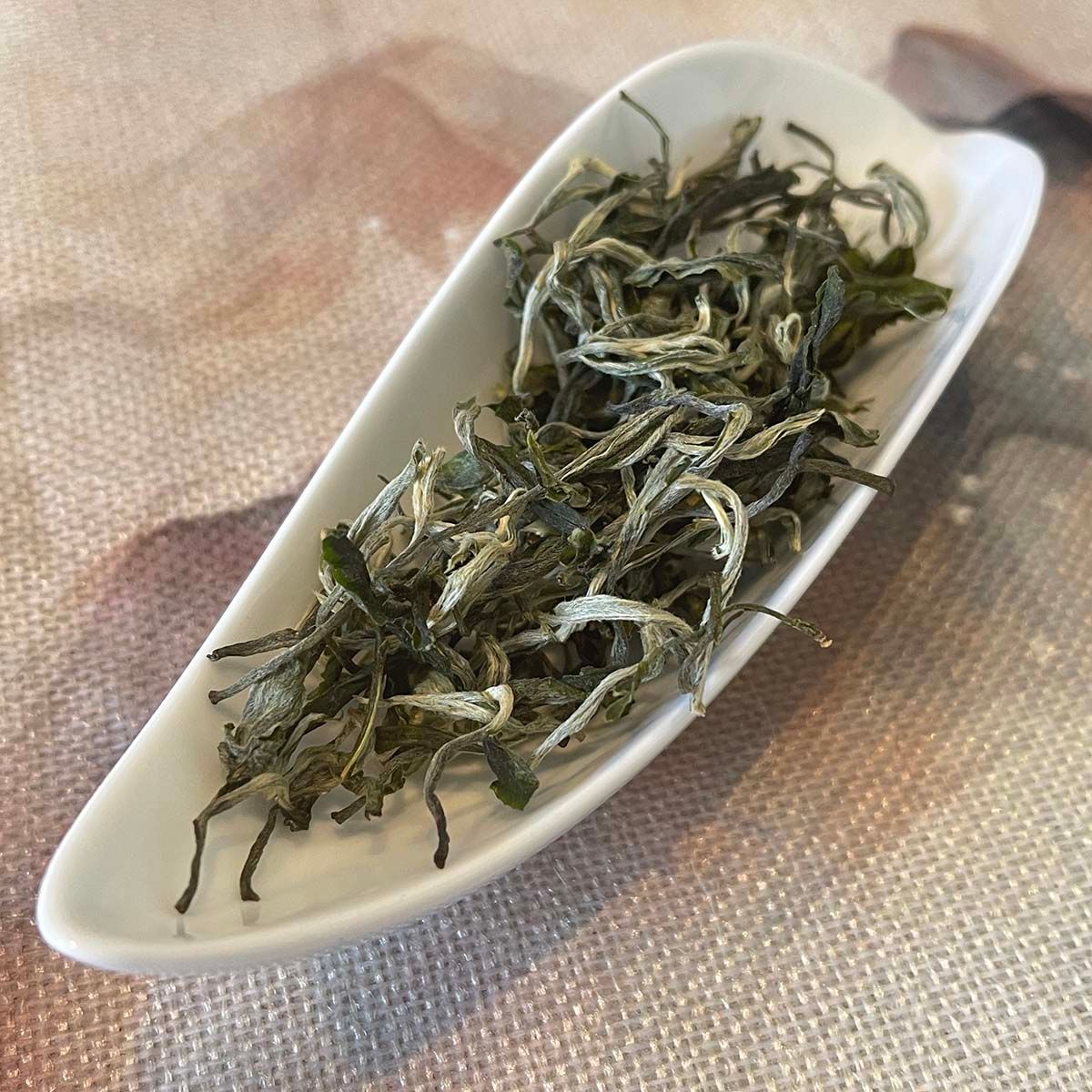
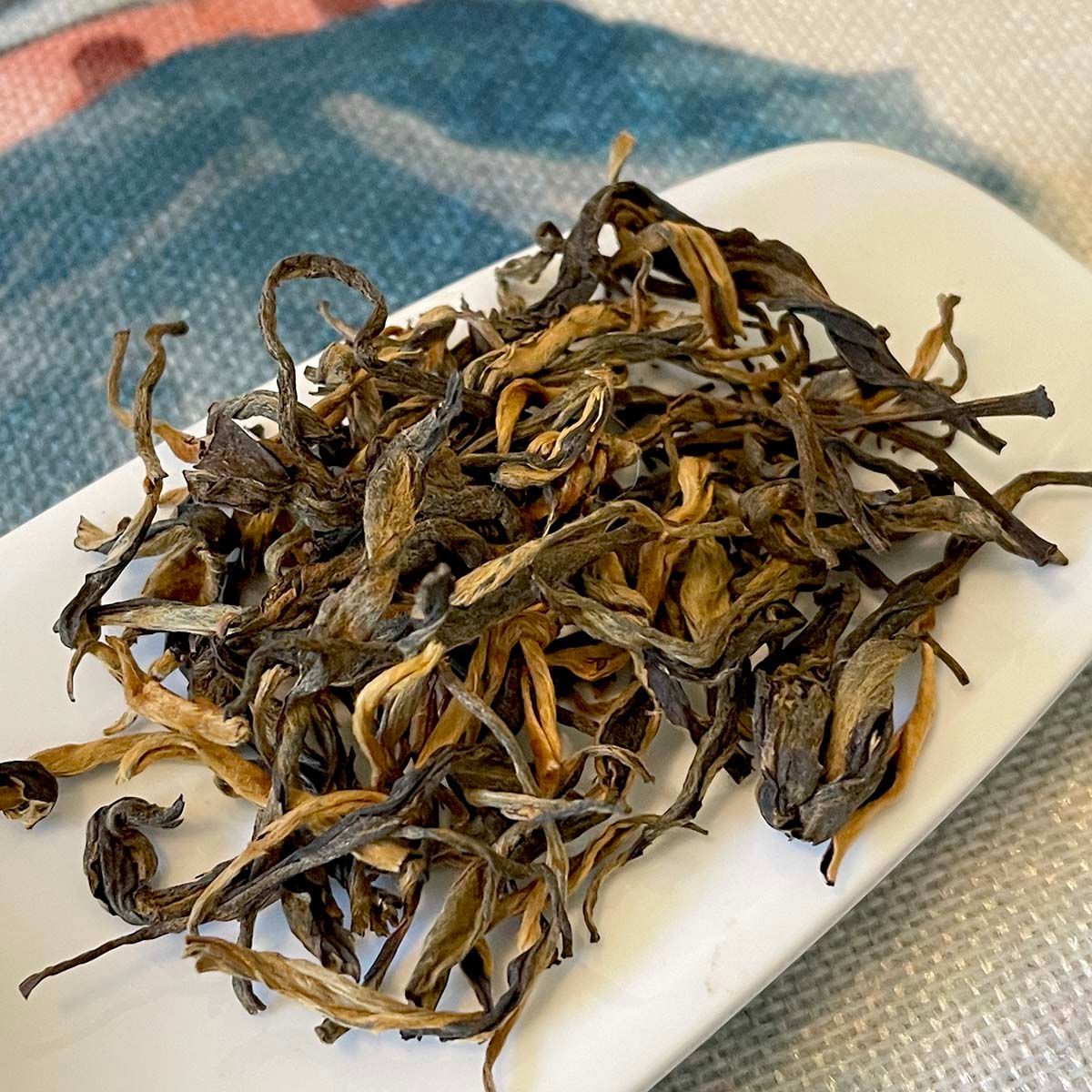
The name is worth unpacking, because both halves of it describe something real. Jin si (金丝) means "golden silk," and it refers to the shape of the leaf. Our own photographs show it plainly: long, fine, tawny-gold strands with a scattering of darker ones mixed through. That look comes from a bud-forward picking, which is also why the tea gives you a lot of infusions for its price.
Mi xiang (蜜香) means "honey fragrance," in Taiwan, mi xiang is a production term with a specific meaning: the leaf has been nibbled by the tea green leafhopper before picking, and the plant's response to that is what generates the honeyed, ripe-fruit character. Our Honey Scent Black Tea from Mount Jade is that Taiwanese style. In Yunnan, though, the same two characters are used far more loosely, as a description of how a tea smells and tastes rather than how it was grown.
Beyond that, this is Dian Hong, which simply means black tea from Yunnan. It is made from the broad-leaved Camellia sinensis var. assamica , the same varietal behind the region's pu-erh and a cousin of Assam, though it drinks far sweeter and with much less of Assam's edge. Dian Hong is also a surprisingly modern style, developed in Yunnan in the late 1930s rather than handed down over centuries, which is part of why there is so much variation between one producer's version and the next.
It is a close relative of our Jinse Fengmi Golden Honey, and if you are deciding between them, the difference is in which direction the sweetness goes. The Jinse Fengmi, from Fengqing, is the maltier of the two, leaning toward chocolate and dark stone fruit. This one is lighter on its feet, with the fruit reading as plum and citrus and the finish staying bright. Neither is the better tea. They are a good pair to drink side by side if you want to understand how much room there is inside a single region, and if you would rather have the classic benchmark first, our Golden Bud Dian Hong is the straightforward one to measure both against.
We stock it from one ounce so you can try an unfamiliar black tea without committing to a large pouch, and it ships from us here in North Carolina.
How To Brew It
Gong Fu Brewing:
Tea
: 5 grams per 4 ounces of water
Water temperature
: 212°F - 100°C
Steeping : 40 seconds. May be infused up to 7 times.
Western Brewing:
Tea
: 1-2 grams per 4 ounces of water
Water temperature
: 212°F - 100°C
Steeping: 2-3 minutes. May be steeped up to 3 times.
Questions
Is it Bangwei or Bangwai?
Both, depending on who is writing. The Chinese is 邦崴, and you will find it romanised each way across tea sellers, maps and travel listings, sometimes split as two words. We use Bangwei because that is the spelling our supplier uses, but if you arrived here searching for Bangwai, this is the tea you were looking for.
Is this the same thing as Dian Hong?
Broadly yes, in the sense that Dian Hong simply means black tea from Yunnan, and this qualifies. In practice the term usually describes the more familiar oven-finished style, so if you want to compare, our Dian Hong Mao Feng makes a useful side-by-side against this sun-dried version.
What does gushu actually mean here?
Gushu translates as "ancient tree" and refers to material picked from older tea plants rather than from young, densely planted bushes. There is no universally enforced standard for how old a tree must be to earn the word, and tree-age claims in this part of the market are often impossible to verify, so we use the term as our supplier describes the material and leave it at that rather than attaching a number to it.
Does it have caffeine?
Yes. It is a true tea made from Camellia sinensis , so it contains caffeine, generally somewhat less than a cup of coffee of the same size.
How should I store it?
Keep it somewhere cool and dark, away from strong smells, in a container that seals reasonably well. Tea picks up odours from a cupboard readily, so it is worth keeping it away from spices and coffee.
Why is it cheaper than the same tea from sellers in China?
Size, mostly. We offer a small quantity so that trying it is a low commitment, where producer-direct sellers typically sell a full pouch as the smallest option. Ordering from us also means domestic shipping rather than waiting on international post.